
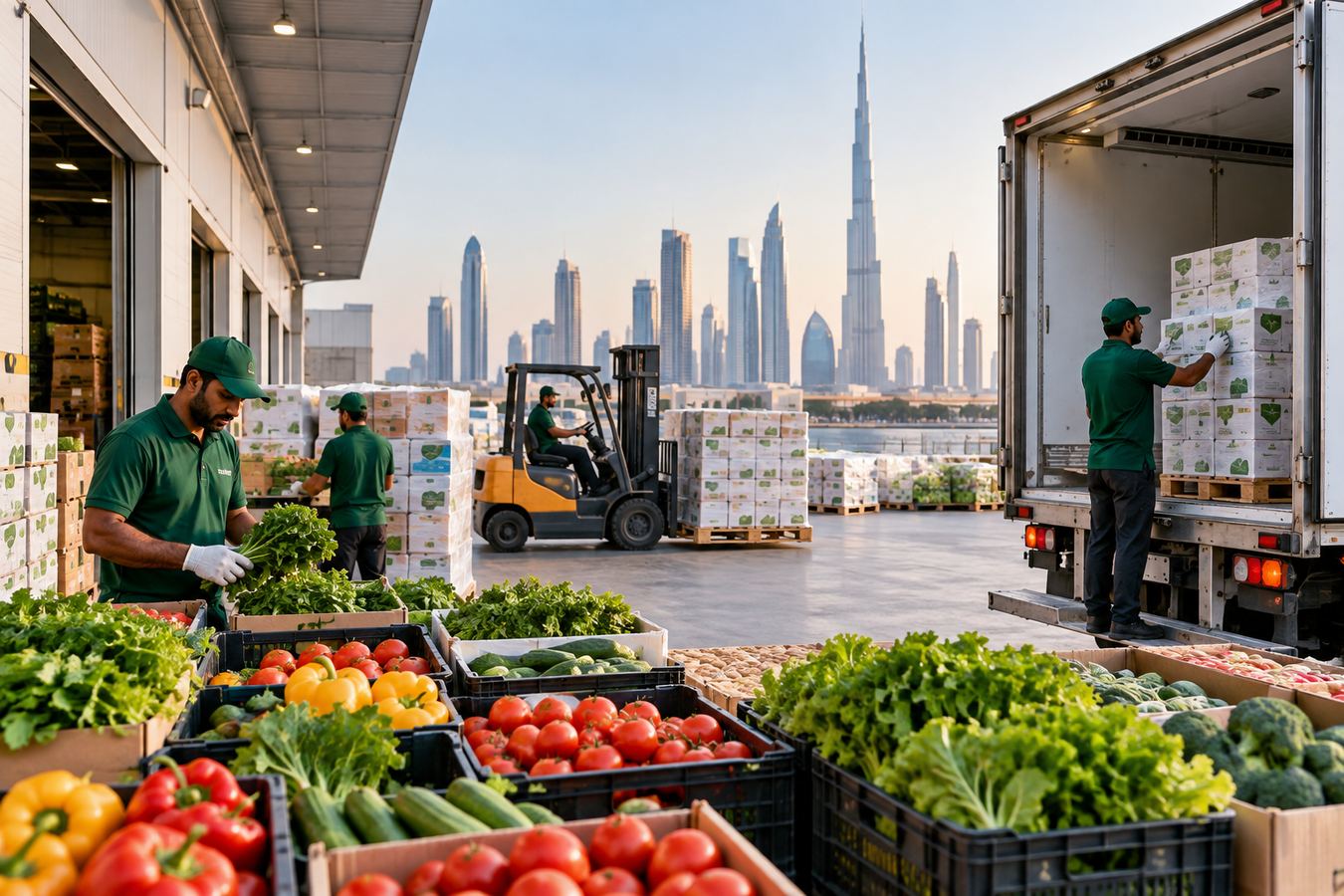
Cold Chain Basics for Fresh Food Export
Cold chain is a product-specific system, not a single temperature number.
Think in terms of a continuous temperature journey
Cold-chain planning should cover harvesting or collection, pre-cooling where appropriate, packing, staging, loading, transport, border or port handling, destination storage and final delivery. A break at any stage can affect the outcome even if the rest of the route is well managed.
Start with product-specific requirements
Different fruits, vegetables and herbs have different sensitivity to temperature, humidity, ethylene exposure and handling. Avoid using one generic temperature assumption for an entire product catalogue. Confirm the appropriate handling conditions for the exact commodity and specification.
Control the handover points
The highest practical risk is often not the main transport leg but the transitions: packhouse to truck, truck to terminal, terminal to container, arrival to receiving facility and final unloading. Define who is responsible at each handover and what checks are recorded.
Packaging and airflow matter
The loading pattern should allow the intended airflow and should respect the package design. Overloading, blocked vents or unstable stacking can undermine the planned conditions inside the load.
Use records, not memory
Where temperature control is important, agree on what will be monitored and retained. Records can help identify whether a problem occurred during pre-cooling, transport, storage or receiving and can support better decisions on future shipments.
Build a contingency plan
Consider what happens if loading is delayed, a vehicle is unavailable, a port or terminal handover takes longer than expected, or the receiving window changes. A practical plan identifies decision points before the shipment is moving.
Cold-chain checklist
Confirm product handling range; pre-cooling approach; packaging airflow; loading pattern; transport equipment; monitoring method; handover responsibilities; expected transit time; receiving window; and escalation contacts. These should be aligned with the actual product and route.