
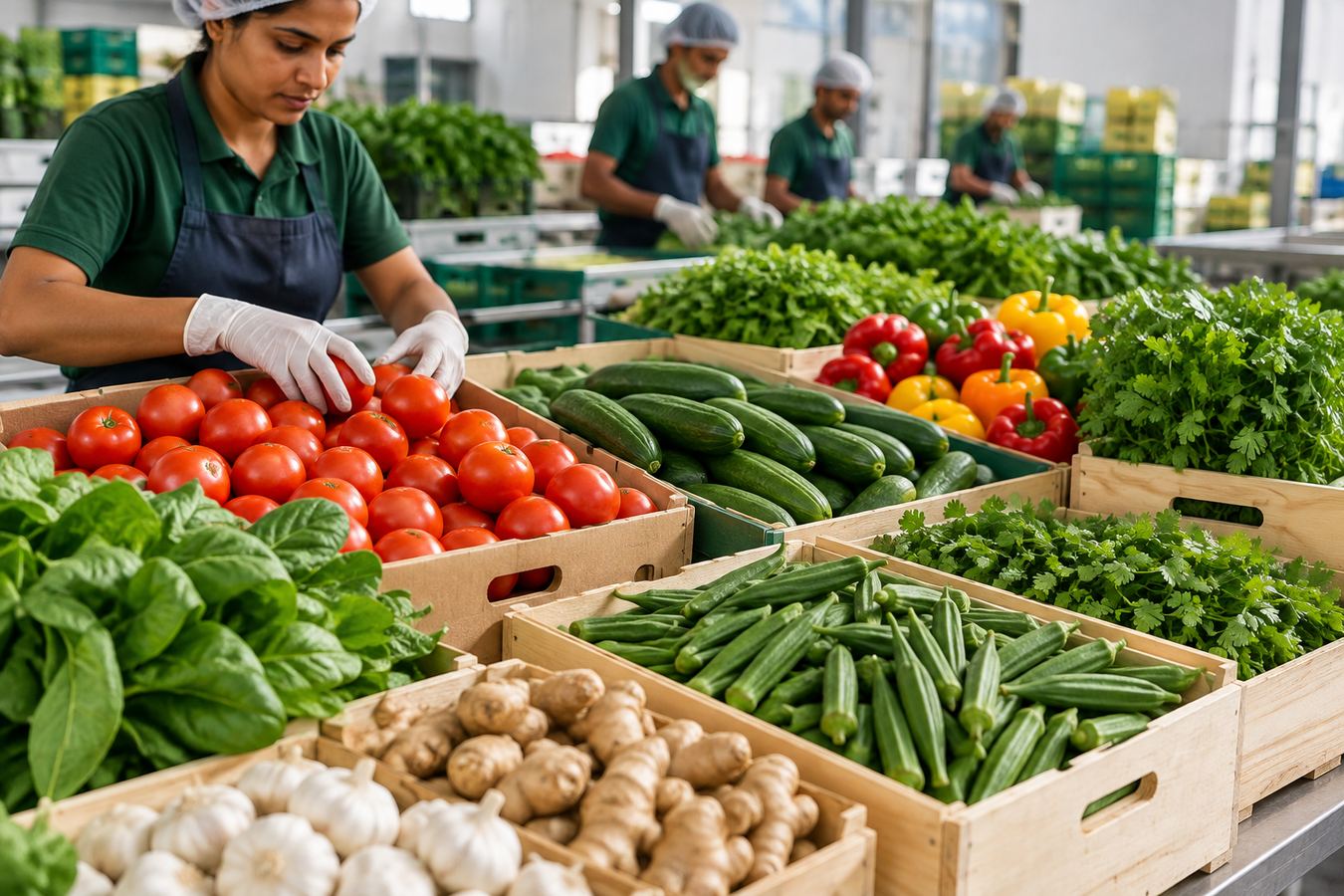
Fresh Produce Packaging: Why It Matters
Packaging is part of the product experience.
Packaging starts with the product
Fresh produce reacts to heat, moisture, compression, vibration and time. A packaging decision should therefore begin with the product’s physical characteristics, expected transit conditions and receiving environment rather than with a preferred carton size alone.
What to define
Record pack material, dimensions, net weight, count or size range, ventilation, liners if applicable, palletisation, stacking limits, labelling fields and handling instructions. These details should be aligned with the buyer’s specification before a commercial shipment is confirmed.
Ventilation and moisture
Some produce benefits from airflow while other products require different moisture-management considerations. Excess condensation can affect appearance and quality; insufficient protection can increase dehydration or mechanical damage. Product-specific trials are more useful than assuming one package works for every category.
Compression and stacking
Carton strength, internal arrangement and pallet pattern can influence damage during handling. Review how the lowest layers will behave under load and whether the packaging remains stable during transport and unloading.
Labelling and traceability
A commercial pack may need product identification, origin, lot or batch references, dates, weight and other information depending on the product, market and applicable rules. Treat the label as part of the compliance and traceability workflow, not as a last-minute artwork task.
Packaging should connect to cold-chain planning
The package, pre-cooling approach, storage conditions and transit plan work together. A strong package cannot compensate for inappropriate temperature management, and a good temperature plan can be undermined by poor ventilation or physical protection.
A practical packaging review
Before a shipment, compare the intended pack with actual product dimensions, handling points, route duration, stacking and buyer specifications. If possible, run a small controlled trial before scaling volume. Record what worked and what needs adjustment.